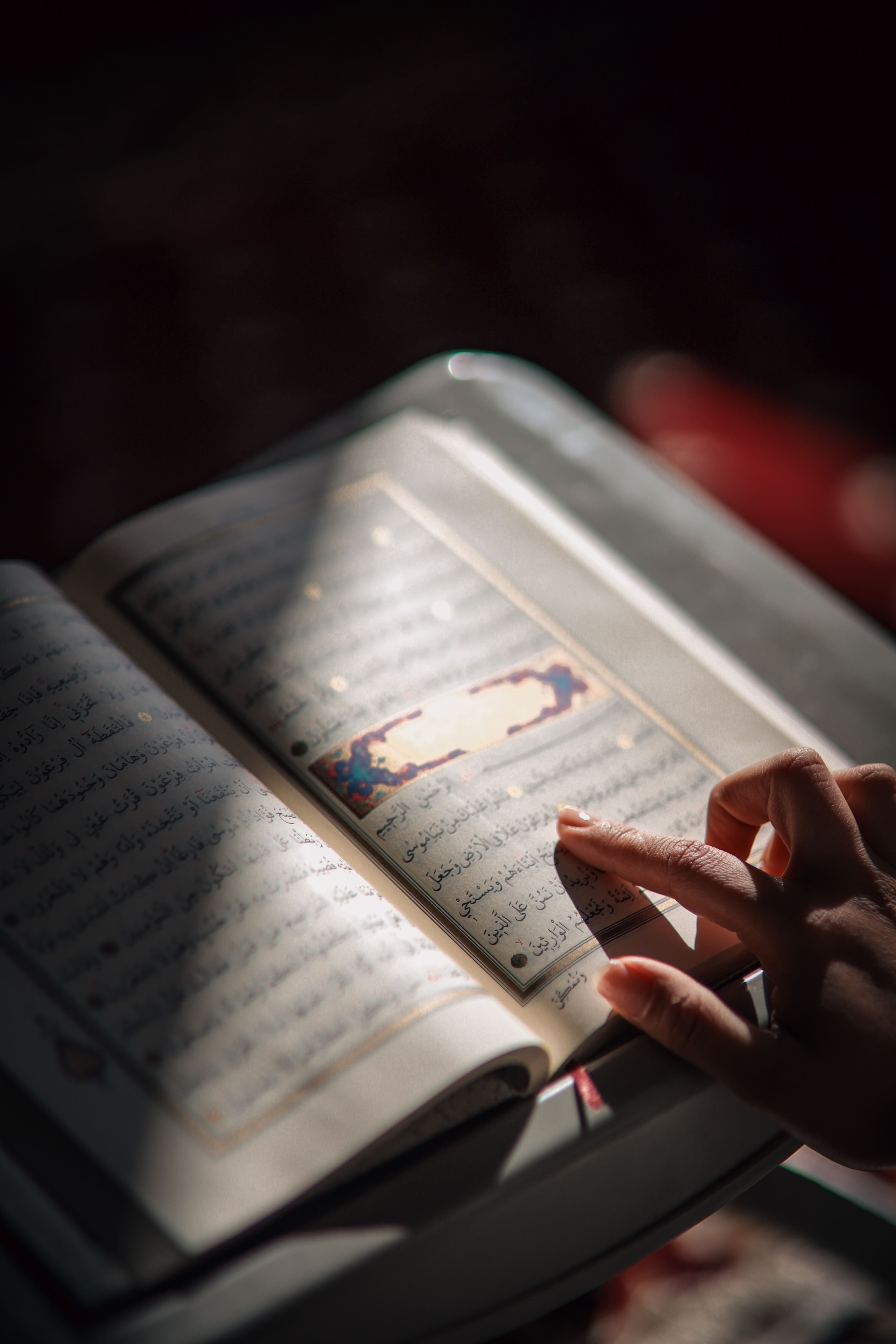
Good Manners in Islam: What the Quran and Sunnah Teach
Politeness, greetings, gratitude, respect for elders: an entire upbringing rooted in scripture

There's a generation people often describe with a certain nostalgia: the one that said hello walking in, meant its thank-yous, asked before acting, and respected elders without needing to be told. What often gets missed is that in the Islamic tradition, these aren't just family habits passed down over dinner tables. They're taught, encouraged, and in several cases treated as acts of faith in the Quran and the Sunnah. Here's what the texts actually say about each of these pillars of good conduct.
A good word before anything else
In the Quran, polite speech isn't a stylistic nicety, it's a command. Allah says: "Kind speech and forgiveness are better than charity followed by injury" (Surah Al-Baqarah, 2:263). Kind words are placed on the same level as charity: they carry spiritual weight, not just social value.
The same principle is repeated, more forcefully, regarding parents and elders in the family: "And if one or both of them reach old age with you, do not say to them a word of disrespect, nor repel them, but speak to them a noble word" (Surah Al-Isra, 17:23). The Arabic term used, qawlan kariman, "a noble, generous word," shows that how we speak to others is a marker of piety, not just etiquette.
The salam: a greeting that builds brotherhood
Saying hello, in Islam, takes the form of the salam: "peace be upon you." It isn't a throwaway phrase. The Prophet ﷺ said: "You will not enter Paradise until you believe, and you will not believe until you love one another. Shall I not guide you to something which, if you do, you will love one another? Spread the salam among yourselves" (Sahih Muslim, no. 54).
The salam is presented here as a concrete tool for building brotherly love, not a mere social reflex.
Gratitude: a duty owed to people as much as to Allah
Saying thank you holds a distinct place in Islamic teaching, so much so that it's directly tied to gratitude toward Allah. The Prophet ﷺ said: "Whoever does not thank people has not thanked Allah" (Reported by Abu Dawud, no. 4811, authenticated by Sheikh Al-Albani). Neglecting to thank someone who has helped us is, in a sense, neglecting to recognize the blessing of Allah that reached us through them.
This gratitude also opens a wider door: "And [remember] when your Lord proclaimed: 'If you are grateful, I will surely increase you [in favor], but if you deny, indeed My punishment is severe'" (Surah Ibrahim, 14:7).
The respect owed to elders
One of the most cited hadiths on this subject describes an old man struggling to make his way through a crowd. The Prophet ﷺ then said: "He is not one of us who does not have mercy on our young and does not respect our elders" (Reported by At-Tirmidhi, who classified it as hasan sahih, and by Abu Dawud).
This hadith places respect for elders on the same footing as tenderness toward children: both are presented as markers of belonging to the Prophet's ﷺ community, not optional extras.
Asking permission: respecting other people's privacy
The Quran sets out a precise rule for entering someone else's home: "O you who have believed, do not enter houses other than your own houses until you ascertain welcome and greet their inhabitants. That is best for you; perhaps you will be reminded" (Surah An-Nur, 24:27).
The Prophet ﷺ specified how this isti'dhan (asking permission) should work in practice: "If one of you asks permission three times and it is not granted, then he should return" (Sahih al-Bukhari, no. 6245; Sahih Muslim, no. 2153). Asking permission, then, isn't a formality, it's a right the other person holds over their own space.
Smiling and loving people for who they are
Greeting others with a smile is, in Islam, a full act of charity. The Prophet ﷺ said: "Your smile in the face of your brother is charity" (Reported by At-Tirmidhi, no. 1956, graded hasan).
As for loving people for who they are rather than for what they own, the Prophet ﷺ put it plainly: "Allah does not look at your appearances or your wealth, but He looks at your hearts and your deeds" (Sahih Muslim, no. 2564). The Quran echoes the same idea, naming the only measure of nobility that counts: "Indeed, the most noble of you in the sight of Allah is the most righteous of you" (Surah Al-Hujurat, 49:13). Neither wealth nor status gets a mention, only the integrity of the heart.
What that "generation" image describes with warmth, the Quran and Sunnah actually spell out with precision: kind words, the salam, sincere thanks, respect for elders, asking permission, and a genuine smile aren't just inherited social codes. They're religious teachings in their own right, and passing them from one generation to the next remains a shared responsibility.
About the author

Abderrazak Memmiche
After a long career in the luxury hotel industry, I have chosen to dedicate myself to what truly matters. Driven by a profound spiritual quest, I share reflections and writings inspired by Islam through this blog, aiming to rediscover its authentic message: a message of peace, wisdom, and light, far removed from distortions and hateful rhetoric. My goal is simple: to convey a sincere, accessible message that remains true to the core values of Islam.
0 comments
Comments
No comments yet. Be the first to leave a thoughtful response.