The Ruins in the Qur'an: What Archaeology Actually Found
Thamud, Sheba, Iram, Pharaoh: where the ruins line up with the text — and why almost no one connects the dots
When a Western reader first comes across the Qur'anic accounts of destroyed peoples — 'Ad, Thamud, the people of Sheba, Pharaoh drowned in the sea — the skeptical reflex is almost automatic: "another ancient legend, like so many others in religious texts." But the Qur'an doesn't present these stories as moral fables floating in some imaginary past. It repeatedly invites the doubter to go and look, to walk through the very places where these civilizations lived and vanished. "Have they not travelled through the land?" is a recurring refrain. That's a testable claim, not an unfalsifiable myth. So the question deserves an honest answer: what has archaeology actually found at these sites, and why do so few people — sometimes even specialists — talk about it?
A text that names real places, not vague legends
Unlike ancient mythologies that place their heroes in kingdoms with no fixed coordinates, the verses quoted above share a striking feature: they point to dwellings (masakin) still standing and still visible. Surahs Ta-Ha (20:128), Al-Qasas (28:58), Al-Ankabut (29:38) and As-Sajdah (32:26) don't say "once upon a time" — they say "you walk past their homes," "it is still there to see." That choice of wording is not trivial: a text that lies about geography risks immediate contradiction from its first audience, Arab caravan traders who travelled precisely those trade routes linking the Hijaz, the Levant and Yemen. It's a bold bet — and a checkable one.
Al-Hijr and Thamud: a listed World Heritage site, a quiet identification
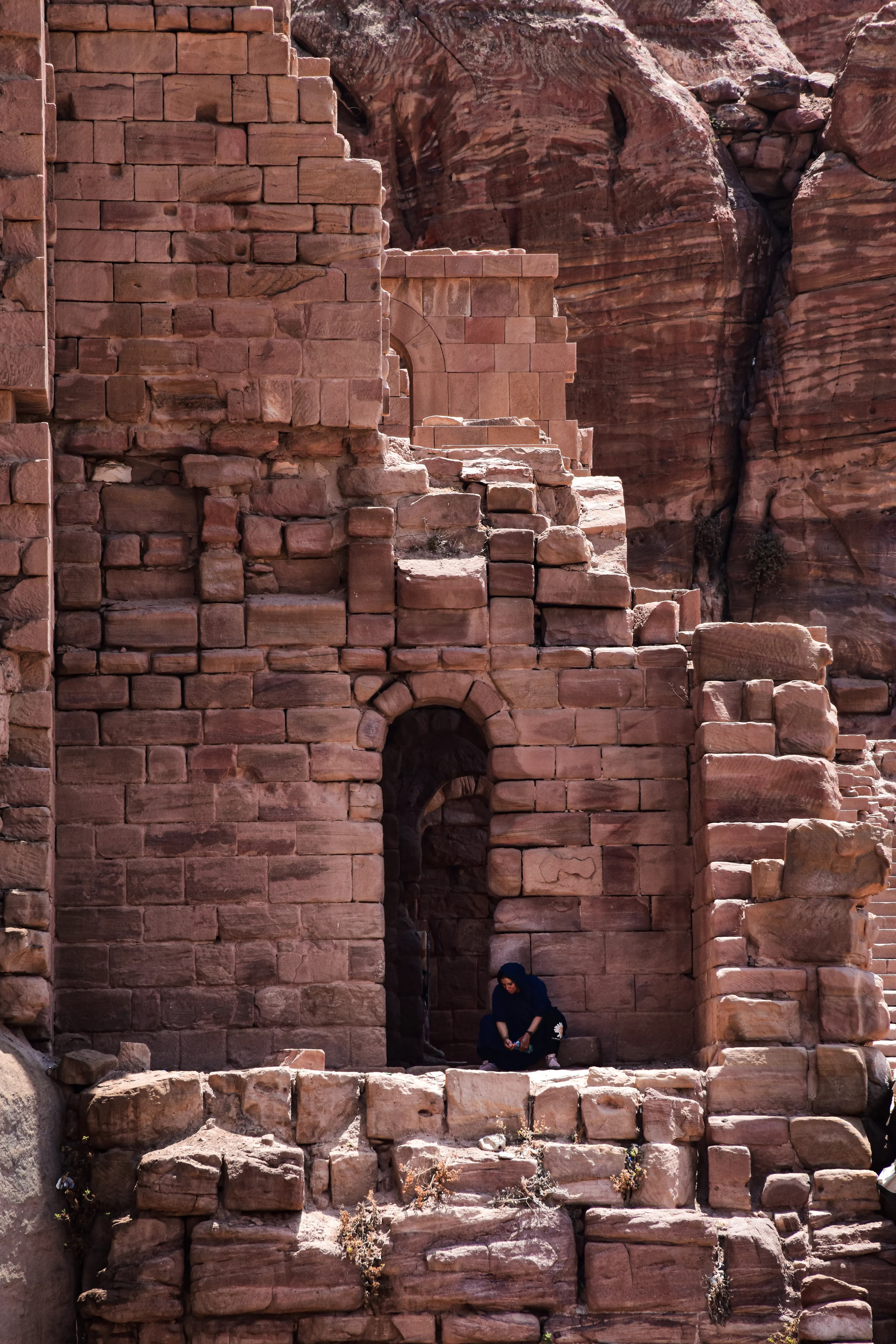
The clearest case is Al-Hijr, known today by its Nabataean name Hegra, or Mada'in Salih, in northwestern Saudi Arabia. The Qur'an (15:80-84) places the people of Thamud there directly — those who "carved homes in the mountains, feeling secure" (15:82), a description that matches strikingly well the 111 monumental rock-cut tombs still visible on site. UNESCO inscribed Hegra as a World Heritage Site in 2008, Saudi Arabia's first such listing, highlighting the architectural skill of its builders. What the plaques and academic papers foreground is the later Nabataean civilization; what gets a passing mention, if that, is the earlier occupation traditionally attributed to Thamud. The site is there, studied, even protected — but the Qur'anic account that has named it for over 1,400 years rarely makes it into the brochure.
The Marib Dam: when historians themselves confirm the text
Surah Saba' (34:15-16) tells of a prosperous people punished by the collapse of a great dam, which unleashed a devastating flood — sayl al-'arim. This isn't a loose poetic image: historians and the French and German archaeological missions that excavated the Marib site in Yemen confirm outright the existence of this massive Sabaean hydraulic structure, one of the largest dams of the ancient world, along with evidence of its successive failures, the last dated to around the 6th century. This isn't even a contested discovery — it's an accepted fact of ancient Yemeni history, documented by non-Muslim institutions. It's exactly this kind of well-documented match that raises the real question: the fact is known to specialists of ancient Yemen, yet it rarely gets connected to the Qur'anic text in mainstream coverage.
Iram of the Pillars: a city rediscovered by satellite in the 1990s
Iram dhat al-'Imad (89:6-8), "the city of lofty pillars," was long filed under folklore by 19th-century orientalists. That changed in 1992, when a team led by American archaeologist Juris Zarins used NASA satellite imagery to trace converging ancient caravan tracks across the Rub' al-Khali desert, and uncovered at Shisr, in Oman's Dhofar region, a fortified octagonal fort matching descriptions of a caravan city swallowed by sand — quickly dubbed "the Atlantis of the Sands" by the international press. Scientific caution requires saying that nothing proves with absolute certainty that this is Iram or Ubar in the exact sense of the Qur'anic account or of pre-Islamic Arab legend. But the coincidence between a text describing a forgotten, pillared city destroyed for its arrogance, and a major archaeological find made possible by space technology, deserves more than a footnote.
Pharaoh and Haman: Maurice Bucaille's contribution, between genuine insight and controversy
This is probably the best-known example among French-speaking audiences. French surgeon Maurice Bucaille, invited in 1976 to examine the mummy of Ramesses II during its transfer to Paris for fungal treatment, found significant salt deposits on the body — consistent with the corpse having spent time in seawater before embalming. That observation struck him in light of the verse: "Today We will save you in your body, that you may be a sign to those who succeed you" (10:92). It's this encounter that eventually led him to convert to Islam and write The Bible, the Qur'an and Science. Bucaille also claimed to have traced, in Egyptian hieroglyphs, a reference to the name Haman, Pharaoh's advisor named in the Qur'an (28:6, 38; 40:36) and absent from the Hebrew Bible, where only a Persian-era Haman appears in a completely different period. This second claim is on shakier ground: critics have argued he forced the transliteration, and it deserves to be presented with that caveat rather than as settled fact. Intellectual honesty serves the case better than overreach here — the salt on the mummy remains a striking, well-documented physical fact regardless of how the Haman debate turns out.
Graham Hancock and the real problem: not silence, but a closed door
Graham Hancock is not a Muslim researcher and never discusses the Qur'an, but his story illustrates a useful mechanism. In Ancient Apocalypse, he argues that an advanced civilization existed before the end of the last Ice Age, leaving traces that mainstream archaeology refuses to seriously examine. The academic response has been overwhelmingly hostile — many archaeologists have called his work dangerous pseudoscience, arguing his claims lack evidence. That academic pushback has real methodological grounding. But it also reveals something else: a discipline that, faced with a hypothesis challenging its established framework, tends to respond with collective dismissal and media mockery rather than patient investigation. That climate doesn't exactly encourage a career archaeologist to spend research time, reputation and funding checking whether the ruins of Al-Hijr, Marib or Shisr line up with a religious text — even though, as shown above, several matches are already published and catalogued, just never tied together in one public account.
What can reasonably be concluded
The picture that emerges is neither a total, organized silence nor an already-sealed scientific proof. It's more nuanced, and in a way more interesting: the sites exist, the excavations happened, the datings are published — but connecting them to the Qur'anic text is almost always missing from mainstream syntheses, left instead to enthusiasts, da'wah blogs, or isolated researchers like Bucaille, caught between believers' enthusiasm and critics' severity. Between the myth some want to see and the definitive proof that may never arrive, what remains is an invitation repeated across several different surahs: travel through the land, and see for yourselves what became of those who came before you.
About the author

Abderrazak Memmiche
After a long career in the luxury hotel industry, I have chosen to dedicate myself to what truly matters. Driven by a profound spiritual quest, I share reflections and writings inspired by Islam through this blog, aiming to rediscover its authentic message: a message of peace, wisdom, and light, far removed from distortions and hateful rhetoric. My goal is simple: to convey a sincere, accessible message that remains true to the core values of Islam.
0 comments
Comments
No comments yet. Be the first to leave a thoughtful response.