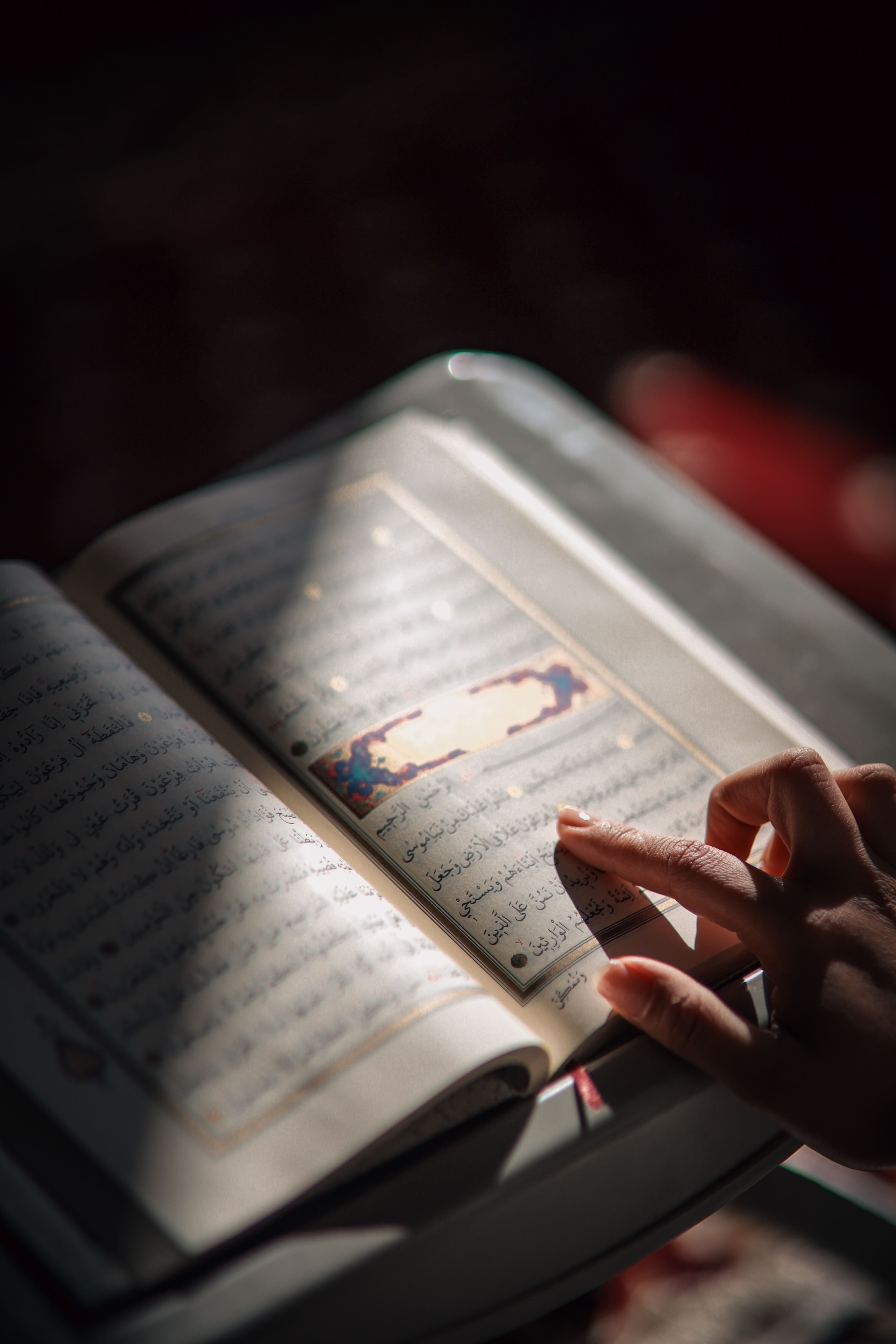
Nail Polish, Tattoos, Contacts: Wudu Meets Modern Life
What actually breaks your ablution, and what changes nothing at all: six everyday situations, examined properly
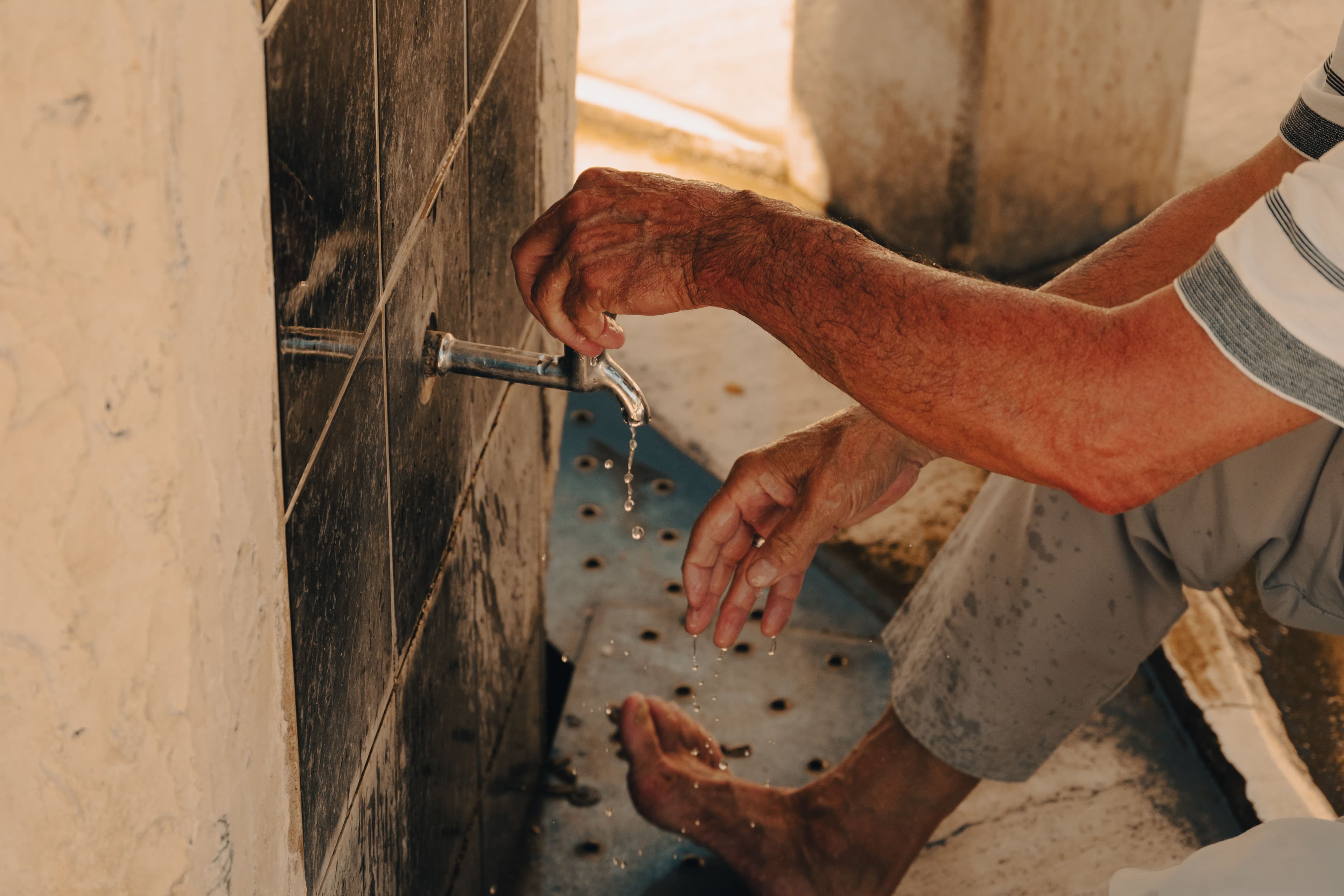
We learn the motions of wudu as children and assume the topic is settled for good. Then one day we're standing at the sink with fresh nail polish on, or stuck at a gate with no water in sight twenty minutes before prayer time, and the doubt creeps in: does this still count? The underlying principle fits in one sentence, and scholars across every school agree on it: water has to reach the skin of the limbs being washed. Everything else — what breaks wudu, what doesn't touch it at all, what comes with a built-in exemption — follows from that single rule. Here are six real-life situations, some obvious, some far less so.
Nail polish: the most-asked question, the most misunderstood answer
Regular nail polish forms a waterproof film over the nail, so water never actually reaches it during wudu. Most scholars are clear on this: unlike henna, whose color soaks into the keratin without blocking anything, sealed polish invalidates the ablution until it's removed. The problem gets worse with gel extensions or semi-permanent polish, which are specifically engineered to survive weeks of water exposure — by design, that's the worst-case scenario for wudu. So the real question is never "which color?" but "does water get through?" — something you can actually check yourself by watching whether the nail's surface reacts to water at all.
Waterproof makeup: same logic, easier to miss
The same principle applies to the face: eyelashes count as part of what must be washed during wudu, a position held by scholars including Imam an-Nawawi. Waterproof mascara or eyeliner, built precisely to resist water and sweat, creates the exact same issue as nail polish — except it's easier to overlook, because "makeup" doesn't intuitively register as "physical barrier." Long-wear foundation raises the same question for the rest of the face. The practical rule stays simple: if a product is marketed as waterproof, assume it blocks water from reaching the skin, and remove it before wudu rather than guessing.
Contact lenses: the most common non-issue
Here's the good news: contact lenses are not a wudu problem at all, and this isn't even a point of disagreement among scholars. The reason is straightforward once you know it: wudu requires washing the face, including the outer eyelids, but never the inside of the eye itself — water isn't meant to get under the lens, just as it isn't meant to get inside the bare eye. The lens sits on the cornea, a spot ablution was never designed to reach. Plenty of lens wearers hesitate out of sheer caution; they can relax.
Tattoos: what water can prove, and what it can't
Tattoos come up in the same conversations, usually with the same flawed logic as nail polish. But ink is injected under the epidermis, not layered on top of it — it creates no barrier and never stops water from reaching the skin. As far as wudu is concerned, a tattoo changes absolutely nothing; a tattooed person performs ablution exactly like anyone else. That doesn't settle the separate, broader question of whether tattoos themselves are permissible in Islam — a debate resting on other texts, including a hadith recorded by al-Bukhari, and unrelated to the validity of ablution. The two questions get tangled together constantly even though, technically, they have nothing to do with each other.
Casts and bandages: the exemption that changes everything
A fracture, stitches, a burn under dressing: these are cases where soaking the limb would clearly do more harm than good. Islam has a specific accommodation here, wiping over the bandage (mash 'ala al-jaba'ir): you wash whatever can normally be washed, then pass a wet hand over the bandage or cast itself, without removing it or forcing water underneath. This holds as long as the bandage stays in place and is still medically necessary; if it comes off or gets changed, the wipe has to be redone. Once the injury heals, you go straight back to normal washing. It's a useful reminder that the fiqh of wudu was never built to pile difficulty onto an already injured body.
No water at all: tayammum meets modern life
Then there's travel, an office with no accessible tap, a long-haul flight, a mountain shelter — no water nearby, or water whose use would cause real harm. The Qur'an addresses this directly (5:6) through tayammum: both hands placed on a clean, dusty surface — a wall, a rock, sometimes even certain floors when nothing better is available — then wiped over the face and hands. This isn't a shameful workaround; it's a fully valid alternative, with its own conditions, built precisely so that no material obstacle ever becomes a barrier to prayer.
Taken together, these six cases make one simple point: wudu isn't a rigid ritual or a trap for the overly scrupulous. It rests on a single principle — water has to reach the skin — flexible enough to handle a polished nail, a tattoo, an arm in a cast, or an airport with no working tap. The real risk isn't doing too little out of ignorance; it's worrying more than necessary, when the answer usually comes down to one question: does the water get through?
About the author

Abderrazak Memmiche
After a long career in the luxury hotel industry, I have chosen to dedicate myself to what truly matters. Driven by a profound spiritual quest, I share reflections and writings inspired by Islam through this blog, aiming to rediscover its authentic message: a message of peace, wisdom, and light, far removed from distortions and hateful rhetoric. My goal is simple: to convey a sincere, accessible message that remains true to the core values of Islam.
0 comments
Comments
No comments yet. Be the first to leave a thoughtful response.